Board of Governors reelected

Successful organizations share two hallmarks—continuity and change.

Continuity is a cherished core value of an organization with a clear vision of what it wants to be/become and a clear definition of what it should to do to turn that vision into reality. Change, on the other hand, guarantees
that the organization is ever moving forward, in tune with ideas that
breed new technology, technology that in turn saves time, cuts costs,
improves productivity, and generally makes life easier and safer for all.

No clearer proof is there of continuity in MaCEA than the reelection of the
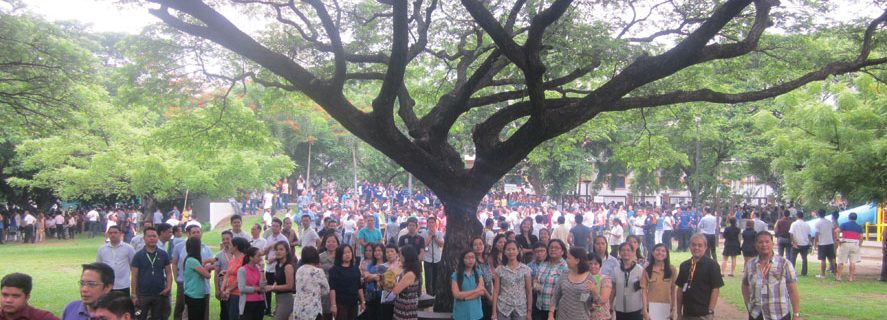
governors during the 54th Annual Membership Meeting on May 09, 2017 at
the Manila Polo Club. There, all eleven incumbent governors were re-installed in the Board—Antonio S. Abacan Jr., David L. Balangue, Manuel A.
Blas II, Cesar V. Campos, Edgar O. Chua, William V. Coscolluela, Ismael G. Cruz, Anna Ma. Margarita B. Dy, Bernard Vincent O. Dy, Antonio G. Puyat, and Cornelio T. Peralta.

The re-installed governors went on to reelect three officers to their positions in the board—Balangue as chairman and president,
Coscolluela as vice chairman and vice Board of Governors reelected
carried through.

And then there’s change, an element of success in the 21st century that MaCEA is in abundant supply of. It is the one thing that ensures that the MCBD will keep marching on to the future, in step with
time, if not ahead of it.

Look around and you see change everywhere. Read about them in the other pages of this issue. president, and Puyat as treasurer. This ensures that the direction the Association has taken in recent years will be carried on and that the projects already started or are in the pipeline shall be

Escalator Replacement Program underway, 11 new ones installed

It was in 1995 when the Association started concretizing its then newly- hatched pedestrianization plan for the MCBD. The plan called for the
construction of three levels of walkways— on grade, underground, and above ground—to promote a major lifestyle change for motorists, encouraging them Architect’s drawing JULY 2017 to quit taking short hops
around the district and take to walking instead. This was aimed at easing the traffic situation in the district before it got worse.

They started with the underpasses, which were equipped
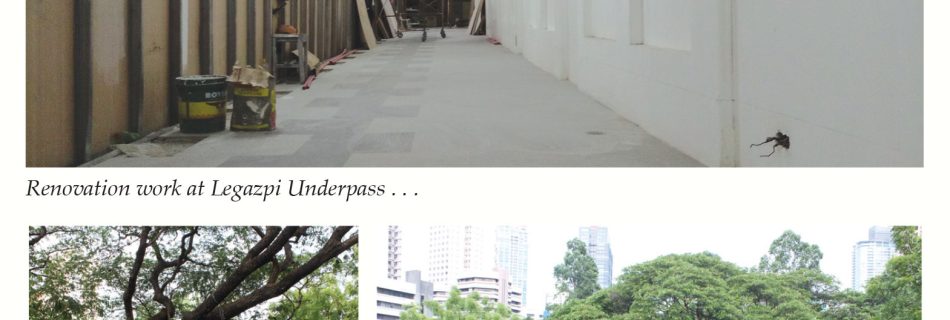
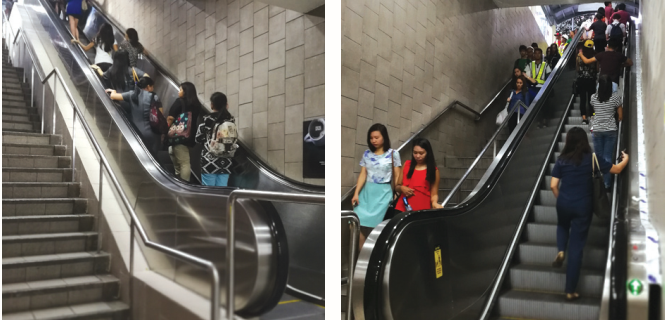
with ascend escalators placed alongside stairways. The normal lifespan of an escalator, given wear and tear, is 15 years. Which explains their frequent breakdowns after 2010. Last year, the Board decided it was time the mechanized stairs were retired. And replaced. The answer: a project to replace the 29 escalators in the 7 underpasses and the elevated walkway that runs the length of De la Rosa St. in Legazpi Village. As of
April 2017, 11 new machines have been installed—two in the Legazpi Underpass, four each at the Rufino and Paseo de Roxas underpasses, and one at the entrance to elevated walkway towards Greenbelt 5.

Replacement of the 18 others will be done on a staggered schedule until 2022 at a total cost of 90 million. The 11 escalators now in place cost P50 million.

It is clear that MaCEA is leaving no stone unturned in its continuing bid
to further secure Makati CBD’s place as the most prized business address in the country.


MaCEA preps for move to new home

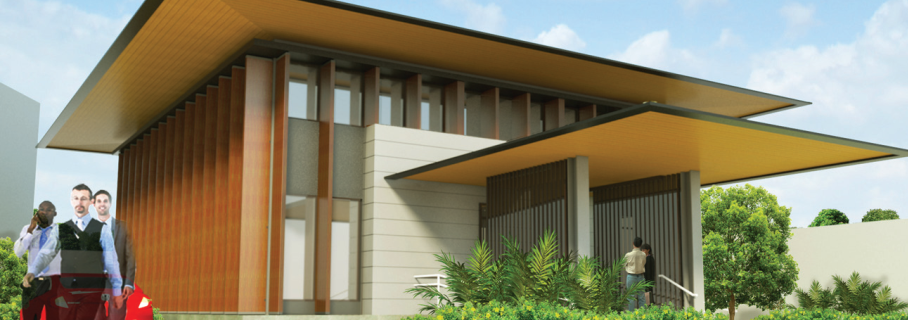
MaCEA is moving to a new home! Soon. The vision of a new MaCEA
building— as gleaned in the architect’s drawing—is slowly but surely taking
concrete form, as it rises from the ground up at the southern corner of the Legazpi car park on Legazpi St., site of the Legazpi Village Sunday Market.

The building is scheduled for completion by November this year, which
means that the staff is likely to be spending Christmas 2017 in their new home.

The new building has two floors, the first to be occupied by a reception area and a boardroom, where the Board of Governors shall henceforth be converging for their monthly meetings.

The second floor will house the general manager’s office, the work stations
of the 10-man staff, a storage area, and a pantry. The building will have centralized air-conditioning and internet connection and ample parking for guests.

This is the fourth move of the Association offices in its 54-year history. Originally operating from a rented space on the third floor of the old Makati
Exchange Building on Ayala Avenue, it moved in 1974 to its own building at the compound of ACEA (Ayala Commercial Estate Association, MaCEA’s former name) on Amorsolo St. corner Tindalo St., in front of the Makati Medical Center. On its 30th year, 1993, MaCEA moved its offices to a
building at the Legazpi Mini Park (now Washington SyCip Park) on Legazpi St., Legazpi Village, where it remains to this day.


Metro Manila Development Authority (MMDA)

In preparation for the feared earthquake expected in the West Valley Fault that runs through many parts of the metro and neighboring provinces, the MMDA staged the Shake Drill and Building Emergency Evacuation Plan (BEEP) in the MaCEA area two times—the first on June 15, the second on June 22.

On both occasions, occupants of buildings in Legazpi Village were directed to stream out of their buildings in an orderly manner and gather at the Legazpi Active Park. The annual exercise is expected to condition the minds of people to the possibility of a major tremor and train them to behave with calmness and reason should it happen.

Rotary Club of Makati

We share the interest of environment advocates in the global wave of concern for the cause of Mother Earth and the urgent need for all inhabitants of our planet to contribute to efforts to shine a light on this cause and help mitigate the damage humankind has wrought.

It was in this regard that we partnered with the Rotary Club of Makati in its Air Quality Monitoring System Project that called for the installation of an air monitoring station on the sidewalk of Parkway Drive and Ayala Avenue. The device, one of four in the metro, measures air quality in real time on a 24-hour basis and transmits readings to the public via an app for both iOS and Android devices.

Utilities & Telecoms Companies

We strive to maintain close cooperative ties with the companies that serve the basic needs of an urban development entity—Meralco for electricity, Manila Water for water, PLDT for landline and internet service, and Globe and Smart for mobile connectivity.
We are pleased with the working relationship we have with these companies and we thank them for delivering service we can count on.

Makati City Government

We provided support to the Department of Environmental Services of Makati City by enjoining MaCEA members to take active part in two Greenhouse Gas Inventory Workshops, the first on October 27, in Barangay Hall of San Lorenzo, and second on November 8, in Barangay Hall of Bel-Air.

Mayor Abigail Campos was a special guest at the inauguration of the Elevated Walkway extension in November and again at the groundbreaking ceremony for the Japanese Garden at the Washington SyCip Park in Legazpi Village in December.

Makati Parking Authority (MAPA)

MAPA and MaCEA remain steadfast partners in the task of preserving the gains and pushing the growth goals of the Makati CBD.

As the entity responsible for crafting policy and implementing parking and traffic rules in the district, MAPA continues to operate the Traffic Management Center. It is equipped with powerful CCTV cameras positioned in strategic locations that are connected to a wall of TV screens at the TMC operational base, where trained operators monitor vehicular flows and, if called for, act to untangle traffic jams and slow down or speed up the movement of vehicles.

In a bid to ease traffic in Salcedo Village, MAPA operatives have seen it fit to relocate the food vending jolly-jeeps along De la Costa St. to the side streets. It was also for the same purpose that MAPA stopped the use of Valero St. as a terminal for loading passengers by UV Express vans plying the Antipolo/Pasig-Makati routes. Loading has been moved to designated points along Ayala Avenue, with loading periods per vehicle limited to half a minute to prevent traffic buildup on this major street.

MAPA enforcers routinely make the rounds of the streets to issue parking tickets, collect parking fees, impose penalties on violators, and generally to enforce parking rules.

NETWORKING: Barangays Bel-Air, San Lorenzo and Urdaneta

As part of the political jurisdiction of said barangays, MaCEA has maintained close ties with barangay officials and nurtured harmonious working relations with them.

Bel-Air and San Lorenzo have lent the Association a hand with traffic, road lighting, and road maintenance. In the year under review, the two barangays undertook asphalt overlay work on nearly 18,000 sqm of roads—12,320 sqm on Valero St. in Salcedo Village by Brgy. Bel-Air, completed in September; and 5640 sqm on Gallardo, De la Rosa and Esteban Sts. in Legazpi Village by Brgy. Legazpi Village, finished in October.

The two barangays continue to use MaCEA parks for their thriving weekend markets—Jaime Velasquez Park by Brgy. Bel-Air on Saturdays, the Legazpi Car Park by Brgy. San Lorenzo on Sundays. Both weekend bazaars have succeeded in growing their respective bases of loyal vendors and shoppers and proven themselves profitable commercial enterprises.

Brgy. San Lorenzo provided a venue for activities of the MMDA and the Makati Department of Emergency Services, and in December dressed up the Active Park with the spirit of the season by illuminating it with Christmas lights.

On the other hand, Brgy. Bel-Air occasionally makes use of the Jaime Velasquez Park as the venue for its cultural and fund-raising activities.

CLEANLINESS & BEAUTIFICATION

The space below the vehicular overpass at the corner of A. Arnaiz Ave. and Amorsolo St. has been adorned with a green wall, a veritable vertical garden that at once fights air pollution and prettifies the place.

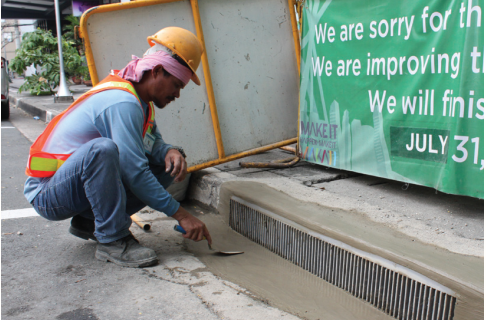
Responding with dispatch to reports of the presence of nocturnal rodents in some places, drainage inlets that used to be open have been fitted with steel railings to keep said pests away.

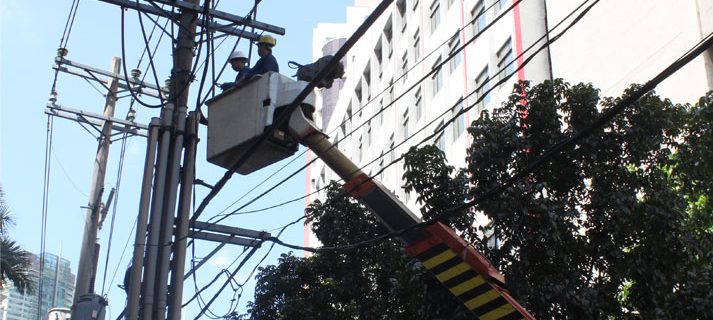
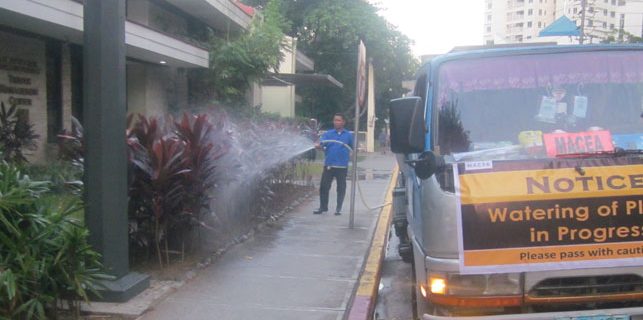
And to make the task of beautification more time- and cost-efficient, we are shifting from manual to mechanized, and have acquired tools for trimming plants and hedges, a mower for cutting grass, and a basket truck for pruning trees and ridding them of branches that stick out towards streets. Plants on center islands are now watered with the use of a watering machine manned by an operator.

The entire stretch of the elevated walkway extension has also been aesthetically enhanced with potted greens on both its exterior and interior sides.

And the staff of the cleaning brigade, clad in uniforms, move from place to place to sweep the streets and sidewalks clean and keep them spic and span throughout the day.

PARKS & CAR PARKS

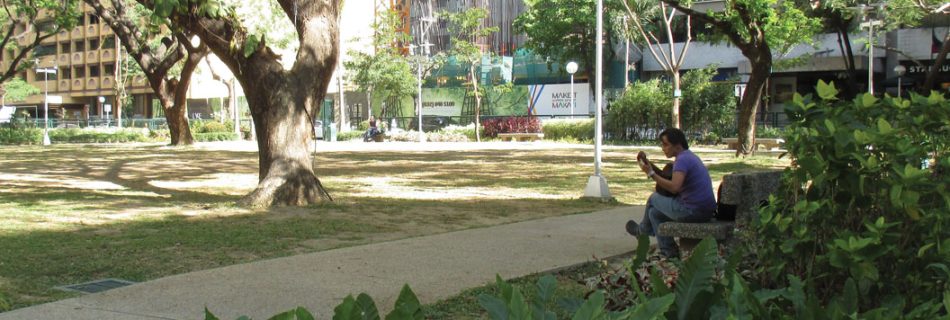
In an urban hub of steel, cement and glass, a patch of green is always held dear, as precious as an oasis in a desert. Three such nooks are found in the MCBD, places to repair to for quiet conversation or to read a book or to break a sweat or simply to sit in silence in an attempt to shut out the din. The lush trees offer the ultimate breath of life, oxygen, a precious gift handed out free by Mother Nature.

The parks are the lungs of the Makati CBD that allow it to breathe and stay healthy.
The Jaime Velasquez Park in Salcedo Village and the Washington SyCip Park in Legazpi Village are home to lush trees that pump out precious oxygen and hedges and grass that offer rest to tired minds and eyes. On weekends they play host to bazaars that draw hordes of shoppers.

The eponymous Washington SyCip Park, unique for the Impy Pilapil art pieces that dot its gardens, will soon be has been made more special by another precious feature: a Japanese garden that symbolizes the best qualities of the crane and the turtle—health and happiness for the crane, stability and longevity for the turtle.

The Japanese Garden, a gift to Mr. Washington SyCip after whom the park is named, , broke ground in October 2016 in a simple ceremony attended by Mr. SyCip, Security Bank President Mr. Frederick Dy, Japanese Ambassador Kazuhide Ishikawa, and Makati Mayor Abigail Campos. The garden was inaugurated on February 14, 2017.

Both parks have been re-greened with additional carabao grass and made more accommodating to bikers with a bike rack to deposit their two wheelers safely in.

Velasquez Park is host to a corner playground where the children can have their fill of fun, while the Active Park in Legazpi Village remains a favored place for health buffs who prefer light exercises such as brisk-walking, jogging, and biking.

ROADS & SIDEWALKS

With the sidewalks taken care of under the Sidewalk Enhancement and the Covered Walkway Projects, the other focal point is maintenance and improvement of the district’s road network.

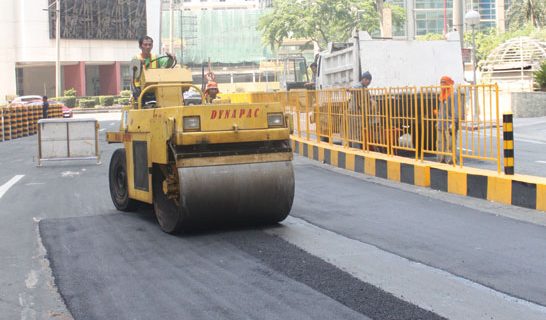
Improvement calls for roads, constantly beaten from wear and tear, to be overlaid with asphalt to make driving smooth and easy.

Asphalting of roads took on a frenzied pace in the year under review, with a total 198,949 sqm of roads covered—91,610 sqm on 14 main roads and 25,529 sqm on 12 back streets in Legazpi Village; 46,350 sqm on 9 main roads and 24,092 sqm on 9 back streets in Salcedo Village; and 11,368 sqm on 5 main streets in the Apartment Ridge area.

In addition, patchwork asphalting for repair of potholed segments was done on 3,808 sqm of roads during the year.

SAFETY & SECURITY

Safety and security are paramount concerns in any community, and especially so in a high-profile commercial and residential center such as the Makati CBD, with an illustrious name to protect and a rich promise to deliver.

With the extension to 24/7of the operating hours of the seven underpasses in the district, the need for greater security has become more pronounced. This called for the installation of CCTV cameras—40 in all—that capture movements and activities in the underpasses. The images caught by the cameras are transmitted in real time to monitors at the MaCEA operations center, where they are recorded and filed, for use in the profiling of subjects.

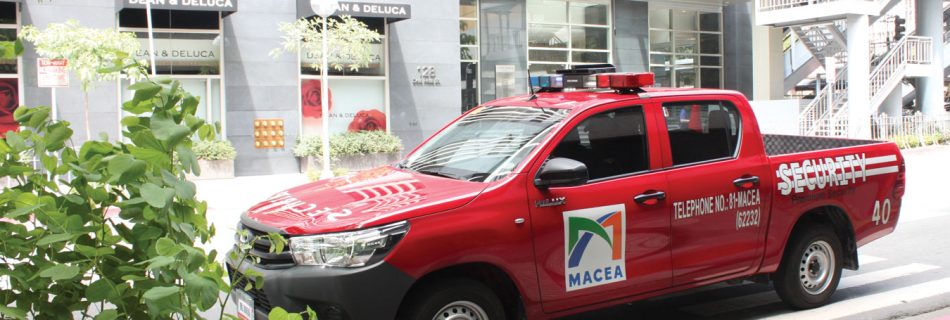
The Association has recently acquired a brand-new pick-up that serves as a deterrent force and first responder in cases of emergency. Manned by two Red Cross-certified first responders, the van is equipped with tools for first aid—an oxygen tank, a blood pressure monitoring machine, a stretcher, and a complete first aid kit.

Colored red, with the MaCEA logo and vanity phone number emblazoned on both sides, the pickup operates in two 12-hour shifts and weaves in and out of streets day and night, ready to respond to emergency situations, its presence alone serving as a deterrent to wrongdoing.

With a number of structures being torn down and new ones rising from the ground up, 
developers are constantly reminded of MaCEA-established policy and rules on safety in construction sites, such as the use of prescribed safety nets and keeping sidewalks open and unobstructed—to ensure self-enforcement of best construction practices and avoid accidents.

As a matter of routine, day-to-day security demands are served by roving guards who patrol the parks, car parks, underpasses and the elevated walkway on foot and by mobile guards who go around the district on motorbikes.

Gil Puyat Overpass Project

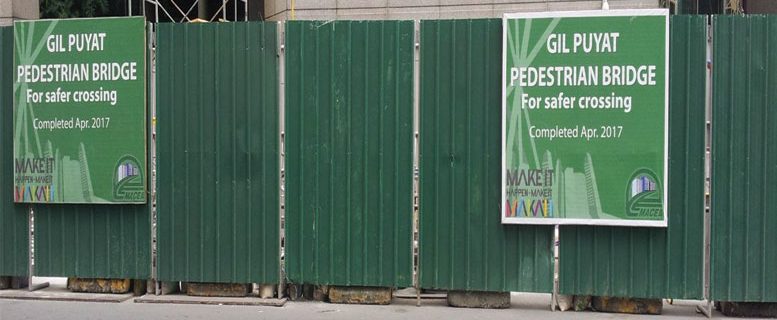
Concern for the safety of the resident, working, and transient communities in the district prompted the Board of Governors to build two foot bridges across busy Gil Puyat Avenue on both sides of Ayala Avenue.

Work on the first bridge, which connects the Columns Building with RCBC Building, was started in November and is scheduled to be completed in June 2017.

The other bridge, on the west side of Ayala Avenue, will connect the Makati Post Office to Teleperformance People’s Support.

When completed, the twin pedestrian overpasses will not only provide safe passage for people crossing Gil Puyat Ave. but are also seen to contribute to easing vehicular traffic in the district and beyond.

Sidewalk Enhancement & Covered Walkways Project

Navigating the roads in the district from one point to another has become safer and more comfortable with the Sidewalk Enhancement Project under which the sidewalks in both Legazpi and Salcedo Villages, with broken, chipped or missing tiles, have been furnished with new ones.

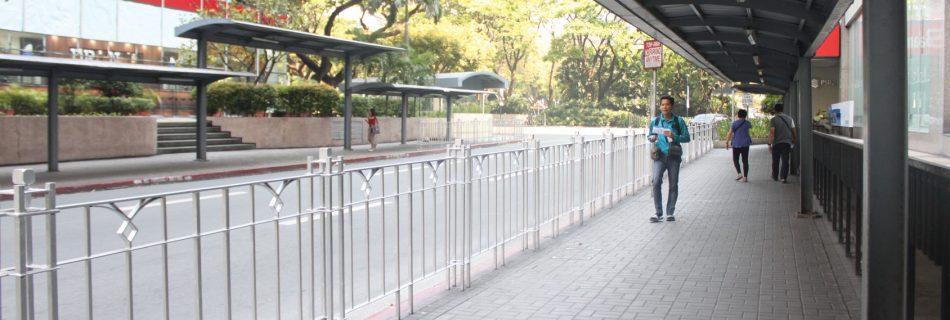
To make walking even more enticing, sidewalks along two major thoroughfares–Valero St. in Salcedo Village and De la Rosa St. in Legazpi Village—have been fitted with roofs for protection from sun and rain. This same amenity has been extended to certain sections of V.A. Rufino St.

In addition, the covered walkways on the entire stretch of Valero St. have been fixed with LED lights, illuminating the once-dark pathways and giving people, especially those who work the late night or graveyard shifts, a heightened sense of security.

Escalator Replacement Project

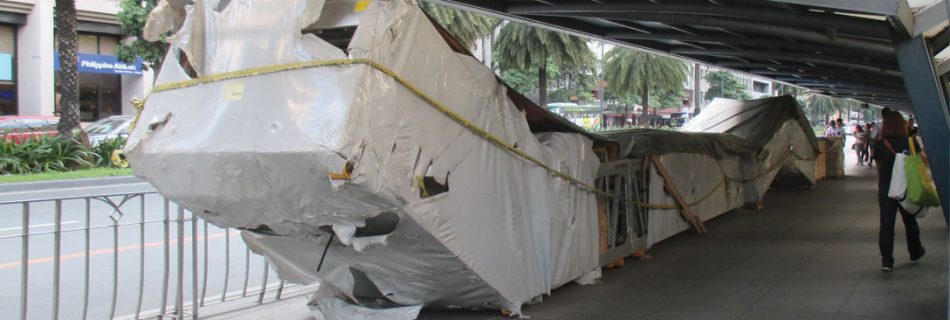
All seven underground passageways and the elevated walkway are equipped with ascend escalators that have, by normal wear and tear, lived way beyond their service lifespan average of 15 years. This prompted the Board of Governors to embark on a project to retire the old escalators and replace them with brand-new ones.

Because of the size of the capital expenses required to replace 29 escalators, however, the Board took the prudent decision to do it by batches.

The first batch, work on which started in November, involves 11 escalators—two at the Legazpi Underpass, four each at the Paseo de Roxas and Rufino Underpasses, and one at the PLDT gateway of the elevated walkway. They are scheduled to reopen and be pressed to service again in April 2017.

The escalator replacement project will be carried on, a few at a time, until all 29 escalators are replaced.

Elevated Pedestrian Walkway

The elevated pedestrian walkway along De la Rosa St. in Legazpi Village, which originally ran 795 meters, now runs the whole stretch of De la Rosa St., from Legazpi St. at the PLDT Building all the way to Salcedo St. behind the Makati Medical Center.

The new segment was blessed and inaugurated on November 28 in a simple ceremony, with Makati Mayor Abigail Campos as guest of honor.

With the 305-meter extension from V.A. Rufino to Salcedo St., the walkway now has a total length of 1,110 meters and brings the residents and workers near the Makati Medical Center and Sen. Puyat Avenue closer to the commercial center.

The 22-year-old elevated walkway has also undergone maintenance with the repair and repainting of the steel posts and railings at various parts, repainting of the hallway near the Enterprise Center, and the replacement of the polycarbonate roof at the Paseo gateway.

The Rebranding of MaCEA

The Makati Commercial Estate Association has been making its mark in the Makati Central Business District for over half a century. Known simply as MaCEA, it has become synonymous with urban center development and has in fact become the model emulated by other central business districts in Metro Manila and the gold standard against which they are measured.

After 50 years, MaCEA is moving forward with a hastened stride—wearing a new face and a fresh identity that encompasses its history of proud achievement, closing loopholes and using new tools that do the job more efficiently and at a faster pace.

Hence the move for change, for rebranding, to polish the MaCEA name to a brighter, more radiant shine. An organization that is in and of the 21st century, comfortable with the technology and devices that drive it forward and keep it connected to and in step with the rest of the world.

We began with a move to boost our public image, the face that we are known by, the look that establishes our identity—a new logo.

We commissioned an artist to design a logo that reflects the Association’s new mindset—dynamic, vibrant, youthful, forward-looking, and very much in tune with the rapidly-moving times. A trademark that reflects its solid grounding on a vision of growth and on a rich history of development that have allowed it to evolve into what it is today: the certified financial capital of the country.

The new logo’s colors symbolize MaCEA’s core values and aspirations—blue for trust and stability, gold for prosperity, and green for sustainability, energy and love of nature.

The signs of change are everywhere, the new branding making itself seen and felt in many ways—we see MaCEA personnel wearing new uniforms; we see a brand-new security van driven by uniformed security men making the rounds of the district 24/7; we keep ourselves updated on goings-on by logging on our facebook page; and we connect with the MaCEA office by dialing an easy-to-remember vanity phone number that carries the Association’s identity: 81-MaCEA or 81-62232.

And there’s the MaCEA Office Building, looking new with a fresh coat of paint, a visible manifestation of the sweeping change throughout the Association.

All these measures are meant to keep us close to and ever connected with the members we serve and, by extension, the transient population that streams in and out of the district we operate in.

Inauguration of the Sen. Gil J. Puyat Avenue Overpass

1.      What is MaCEA?
The Makati Commercial Estate Association, Inc. (MaCEA) is the association of property owners (numbering 391 as of 30 June 2017) in the Makati Central Business District (MCBD), the country’s premier financial center. 
 It was established in 1963 for the purpose of advancing the civic, commercial and residential interests of its members, promoting the general welfare and prosperity of the District and its surrounding communities, and enhancing the reputation of the Association as a top-notch urban planner and developer, and the stature of the MCBD as the undisputed premier financial district in the Philippines.
 MaCEA was registered with the Philippine Securities and Exchange Commission (SEC) on February 25, 1963 for an initial operation life of 50 years. On October 7, 2011, the SEC approved an amendment to its Articles of Incorporation extending its operational existence for another fifty (50) years, from 25 February 2013 to 24 February 2063.
 2.      What are you announcing today?
MaCEA is launching today, 14 July 2017, the Sen. Gil J. Puyat Avenue Pedestrian Overpass Project. It is one of two foot bridges connecting the two sides of Gil Puyat Avenue.
The overpass being opened today links RCBC Plaza to The Columns Ayala Avenue and will benefit thousands of pedestrians and motorists who pass this main thoroughfare day and night, every day.
 The footbridge is part of MaCEA’s tri-level Pedestrianization Program designed to ease traffic in the MCBD by making walking a safer, cheaper and more convenient option for moving around the district for both motorists and pedestrians.
Also to be announced today are updates on the modernization program for the underpass and elevated walkway escalators; the new, graphically designed street wayfinders, and the latest developments on our enhanced sidewalks.
3.      Why is the Sen. Gil J. Puyat Avenue pedestrian overpass important?
Sen. Gil J. Puyat Avenue is a major arterial street in the metro that runs on an east-west/west-east course through the cities of Makati and Pasay, from EDSA on the east to Roxas Blvd. on the west.
MaCEA built the first overpass at a cost of P55 million, while the second overpass, linking the People Support building to the Makati Post Office, will cost P70 million.
The overpass is 38 linear meters long and 2.4 meters wide. It is accessible by staircases and escalators on both sides. It is covered with a roof and has been provided with glass railings.
Not many people may know this, but the avenue honors the late Gil J. Puyat, one of the most distinguished Filipino statesmen and businessmen of the country. He served as senator for 21 years, five of them as senate president. This street was formerly known as Buendia Ave., after Nicolas Buendia, a senator from Bulacan.
4.      What are the updates to your modernization of the MCBD’s underpass escalators?
Eleven of 29 escalators around the MCBD have now been replaced at the cost of P55 million. The 11 new ones are now serving the pedestrian public in these locations:
Two at the Legazpi Underpass
Four in V.A. Rufino St.
Four in Paseo de Roxas
Entrance to the elevated walkway going to Greenbelt 5
The replacement of all 29 escalators in seven underpasses and the 1-km. elevated walkway, the country’s longest, is expected to be completed by 2022.
5.      What has changed with the MCBD’s new street signs?
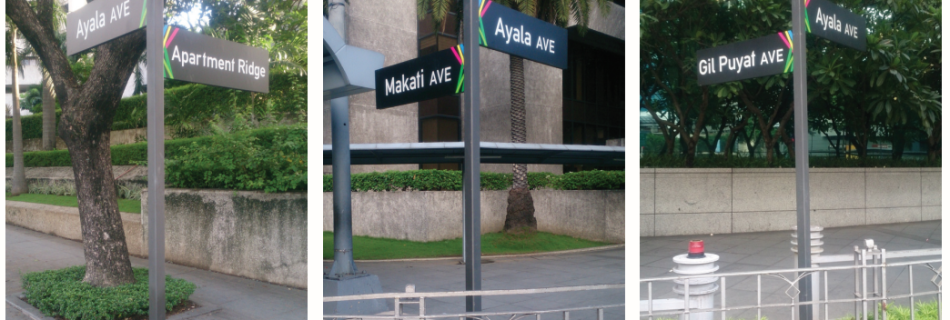
The new street signs have been enlarged, with a bigger, sans serif font that is eminently readable, made attractive with a graphic design at the inner corners that features the common colors of “Make it Makati” and the new MaCEA logo. The signs feature reflectorized text that make them visible in the dark.
As of 30 June, 28 new street signs have been installed in all the street corners along Ayala Avenue, from Apartment Ridge near EDSA all the way to Gil Puyat Avenue. Eventually, the new wayfinding system will cover all the street corners in the entire MCBD.

  1. What improvements have been done on the Makati sidewalks? Which areas were involved?
    There are two sides to the sidewalk improvement project in the MCBD: one, the enhancement of open sidewalks, and two, the installation of roofs and lighting fixture over the sidewalks.  
    The latest run of the project has seen the enhancement of 14,721 sq.m of open sidewalks, with new tiles and ornamental plants in Salcedo and Legazpi Villages, and the outfitting of the 1,878 sq. m walkways with roofs and overhead lighting in both villages.

Traffic to subside with opening of new Gil Puyat Ave. overpass in MCBD

Traffic in the Makati Central Business District (MCBD) is expected to ease up with the opening of the first of two new pedestrian overpasses on Sen. Gil J. Puyat Avenue. The roof-covered footbridge with glass railings and escalators stretches from the RCBC Plaza building to The Columns Ayala Avenue.
The project is part of the Makati Commercial Estate Association’s (MaCEA) tri-level pedestrianization program meant to ease traffic by supporting walking as the safer, more convenient, and affordable option to move around the business district.
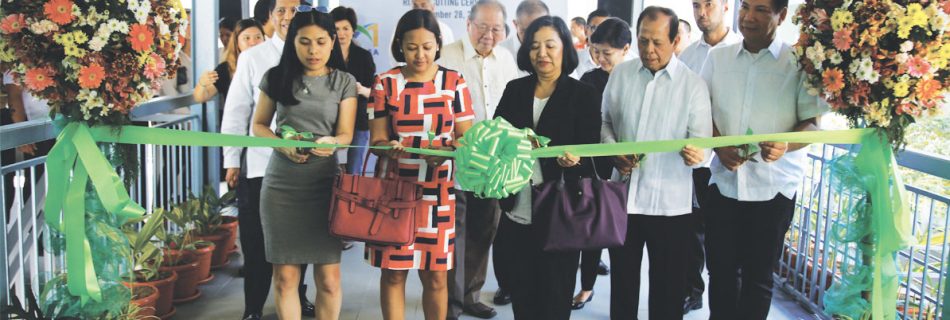
MaCEA, represented by vice-chairman Arch. William V. Coscolluela, and Makati City Mayor Abigail Binay, led the inaugural ceremony for the new overpass. The overpass will benefit thousands of pedestrians and motorists who traverse this busy road day and night.
Sen. Gil J. Puyat Avenue is a major arterial street in Metro Manila that runs on an east-west/west-east course through the cities of Makati and Pasay, from EDSA on the east to Roxas Blvd. on the west. Formerly called Buendia, the avenue honors the late statesman who served as senator for 21 years with five terms as senate president.
MaCEA has set the second overpass for completion in April, 2018. This new covered footbridge will link the People Support building to the Makati Post Office and will be built to the same quality standards.
MaCEA is a 391-member strong association of property owners of the country’s main financial and commercial district. Aside from the new overpass project, MaCEA is undertaking the escalator modernization program in the area. It has recently completed the replacement of 11 escalators at the Legazpi Underpass, V.A. Rufino St., Paseo de Roxas and the elevated walkway entrance to Greenbelt 5. A total of 29 escalators are set for upgrades, including escalators in the 1-km. long elevated pedestrian walkway from Greenbelt to Salcedo St. near Makati Medical Center.
Motorists and pedestrians to the MCBD may have also noticed MaCEA’s installation of a new and improved wayfinding system. The new street signs are larger, use bigger fonts with reflectorized text and graphic designs on the side to represent the colors of “Make It Makati” and the MaCEA logo. They are also more visible in the dark.
“Twenty-eight new street signs have been installed in all the street corners along Ayala Avenue, from Apartment Ridge near EDSA all the way to Gil Puyat Avenue. Eventually, the new wayfinding system will cover all the street corners in the entire MCBD,” said MaCEA President David L. Balangue. “This will aid the general public in navigating through the dynamic streets and iconic landmarks of the MCBD.”
The association has also been involved in sidewalk improvements for the MCBD. Some 14,721 sqm of open sidewalks have been enhanced with new tiles and ornamental plants in Salcedo and Legazpi Villages, while 1,878 sqm walkways have been outfitted with roofs and overhead lighting in these villages.